Last Updated: November 1, 2026
Quick Summary
To safely remove mold from a front load washer gasket, wipe the seal with a cloth dampened in white vinegar or a mold cleaner made for appliances, scrub gently with a soft brush, then dry it thoroughly. Never mix bleach with vinegar.
- Run an empty hot-water cycle and open the door to loosen residue before cleaning.
- Pull the rubber seal back gently to clean inside the folds where mold collects most.
- Wear gloves and ventilate the room, and never mix bleach with vinegar or other cleaners.
- Wipe the gasket dry after each load and leave the door open between uses.
- Cracks, tears, or a loose seal mean the gasket should be replaced, since cleaning will not fix it.
Table of Contents
- Why Front Load Washer Gaskets Grow Mold
- What You Need Before You Start Cleaning
- Step-by-Step: How to Clean Mold Off the Gasket
- Bleach vs. Vinegar for Washer Mold: Which to Use
- Best Mold Remover for Washing Machine Gasket Options
- Mold Stain, Mold Damage, or Gasket Wear: How to Tell the Difference
- How Often to Clean Washer Gasket and Prevent Mold From Returning
- Scheduling Your Next Appliance Check With Kelly Appliance Repair Service
- Frequently Asked Questions
Why Front Load Washer Gaskets Grow Mold
Front load washer gaskets grow mold because they stay wet. The rubber seal around the door creates a pocket where water, soap residue, and lint collect after each cycle. When the door stays closed, that moisture has nowhere to go, and mold settles in quickly.
Mold often goes unnoticed until a musty smell shows up.
Several habits make the problem worse:
- Running small loads with too much detergent
- Leaving the door closed between washes
- Skipping the occasional hot cleaning cycle
- Letting wet clothes sit in the drum for hours
A quick look at the gasket after each load helps catch the problem early. Mold often shows up as dark spots or a thin film that wipes away with little effort.
What You Need Before You Start Cleaning
Gather your supplies before you touch the washer. Working with the right tools makes the job faster and safer.
You will need:
- Protective gloves, such as rubber or nitrile
- Microfiber cloths or a soft white cloth
- A soft-bristled brush, like an old toothbrush
- White vinegar or a cleaner made for mold
- A spray bottle for diluted cleaning solution
- A dry towel for the final wipe-down
Keep the area ventilated while you work. Open a window or run a fan so fumes do not build up in the laundry room.
Watch out: Never mix bleach with vinegar or any other cleaner. The mix can release harmful gases. Use one cleaning product at a time, and rinse the surface well before switching.
Step-by-Step: How to Clean Mold Off the Gasket
Start by running an empty hot-water cycle, then open the door and let the drum dry. This loosens residue before you begin.

Put on your gloves. Then follow these steps:
- Wipe the visible gasket surface with a cloth dampened in your cleaning solution.
- Use a soft brush to scrub any stubborn spots gently.
- Let the solution sit on the mold for a few minutes so it can work.
- Wipe the surface clean with a fresh, damp cloth.
- Dry the gasket thoroughly with a dry towel.
Leave the door open after cleaning. Air circulation helps the seal dry completely, which slows future mold growth.
Pulling Back the Gasket to Clean Inside the Folds
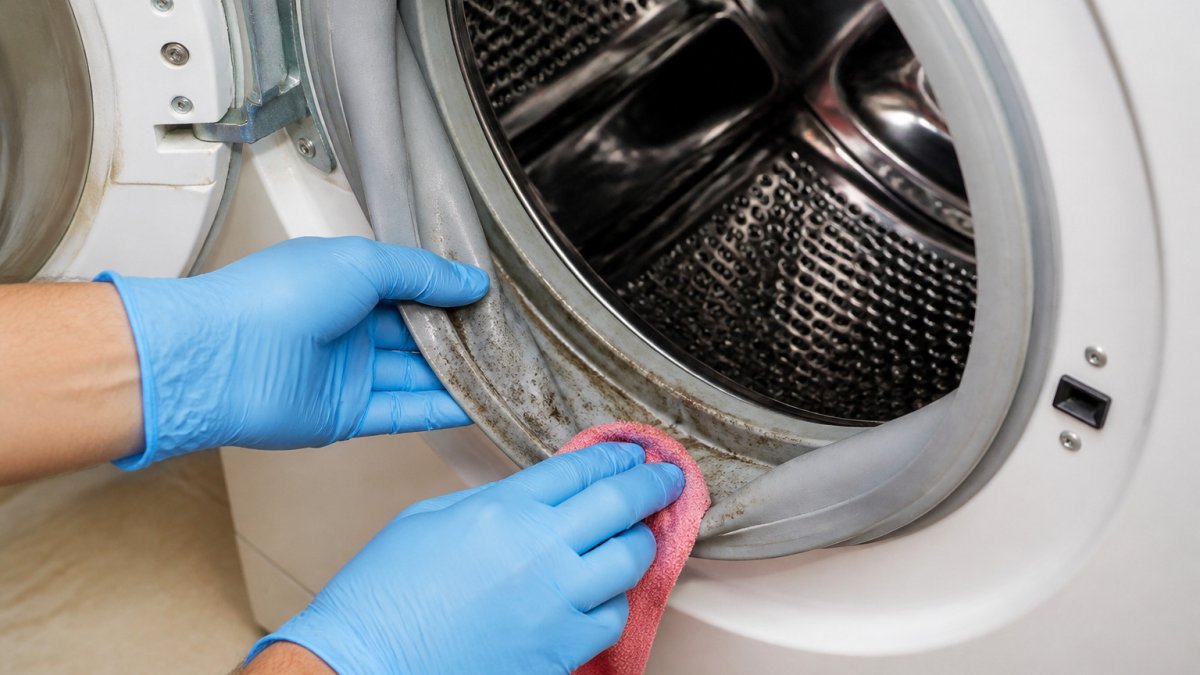
The folds of the gasket trap the most mold, and a surface wipe will not reach them. Gently pull the rubber seal back from the door frame, working one section at a time so you do not tear it.
Once the fold is open, wipe the inside with your cloth and use the brush on any buildup. Check the crease carefully for dark spots, then dry it before you let the seal return to its position.
The cleaning process comes down to a few clear steps, each with a simple action.
| Step | What to do | Time or frequency |
|---|---|---|
| Pre-clean | Run an empty hot-water cycle, then open the door to dry the drum | Before you begin |
| Wipe | Wipe the visible gasket with a cloth dampened in cleaning solution | As needed |
| Scrub | Gently scrub stubborn spots with a soft brush | As needed |
| Soak | Let the solution sit on the mold | A few minutes |
| Rinse wipe | Wipe clean with a fresh, damp cloth | Once |
| Dry | Dry the gasket thoroughly with a dry towel | Once |
| Air out | Leave the door open after cleaning | Until fully dry |
| Routine | Run a hot cleaning cycle to prevent regrowth | Every month or two |
Bleach vs. Vinegar for Washer Mold: Which to Use
Both bleach and white vinegar can help with mold, but they work differently. Vinegar is a milder choice for regular cleaning. Bleach is stronger but needs extra care.
If you use bleach, dilute it according to the label, wear gloves, and ventilate the room well. Never combine it with vinegar or ammonia-based cleaners.
BOOK YOUR SERVICE REPAIR TODAY →
Whichever you choose, check the product label and any guidance from your washer’s maker before cleaning. Materials on some seals can react poorly with strong cleaners.
Best Mold Remover for Washing Machine Gasket Options
A mold cleaner made for appliances can save time, but it is not the only option. For a best mold remover for washing machine gasket use, look for a product labeled safe for rubber seals and suitable for mold.
Read the label before you buy. It should tell you how to apply the product, how long to leave it on, and whether it is safe for rubber.
Skip any product that promises to remove permanent stains or fix damaged rubber. The seal may still need replacing.
Mold Stain, Mold Damage, or Gasket Wear: How to Tell the Difference
Not every dark mark on the gasket is active mold, and not every mark can be cleaned away. Knowing which problem you have prevents wasted effort and helps you decide when to replace the seal or call a technician.
Use this test after a thorough cleaning and a full dry:
- Surface mold: Fuzzy, spotted, or film-like growth that wipes away or lightens noticeably after cleaning. It usually returns only if moisture stays trapped.
- Permanent stain: A flat discoloration, often gray or pink, that remains after cleaning but does not feel raised or fuzzy. Dye transfer from clothes and detergent residue can cause this. It is cosmetic and does not necessarily mean the gasket is failing.
- Gasket wear or damage: Cracks, tears, flattened areas, a stiff or brittle feel, or a seal that no longer sits flush against the frame. Mold can grow into these defects, and cleaning will not restore the seal.
Decision criteria:
- If the mark lightens with cleaning and the rubber is flexible and intact, continue your regular cleaning routine.
- If the mark remains after two careful cleanings but the rubber is still soft and sealed, treat it as staining and monitor it. Do not use abrasive pads or strong solvents, which can damage the rubber.
- If you see cracks, tears, or a loose seal, or if water leaks around the door, plan to replace the gasket. Cleaning will not fix a failed seal.
- If mold returns within a few days of cleaning, the gasket may be holding moisture internally or the washer may have a drainage or ventilation problem. Have a technician inspect it rather than relying on repeated cleaning.
Check your washer’s manual for the manufacturer’s guidance on gasket care and replacement intervals. Some makers specify cleaning products to avoid and note that certain seals are not designed to be pulled back. Following those instructions protects the seal and your warranty.
Cleaning is for surface growth on sound rubber. Staining is cosmetic. Cracks, tears, leaks, and mold that returns quickly point to a damaged gasket or a moisture problem that cleaning alone will not solve.
How Often to Clean Washer Gasket and Prevent Mold From Returning
Wiping the gasket regularly is a good habit. Homes with frequent laundry or high humidity may need more frequent cleaning.
A simple prevention routine helps:
- Wipe the seal dry after each load
- Leave the washer door open between uses
- Remove clothes from the drum right after the cycle ends
- Run a hot cleaning cycle every month or two
- Use only the amount of detergent the load requires
Regular upkeep is easier than a deep clean.
Scheduling Your Next Appliance Check With Kelly Appliance Repair Service
If the gasket looks damaged, or the mold keeps coming back, a professional check can help. book a Monroe appliance repair visit when you want a technician to look at the seal and the washer itself. You can also contact the team from the main page to ask about service availability.
For laundry problems beyond the gasket, dishwasher repair in Monroe covers another common service request. A technician can help you decide whether a cleaning will solve the issue or whether a repair is needed.
Before your visit, note when the odor started, how often you run the washer, and whether you have seen any cracks in the seal. That information helps the technician work faster.
For the official guidance on washer care and cleaning, see appliance cleaning and care guidance. For general information on mold in the home and its health effects, see mold basics and home moisture control. For product safety and proper use of household cleaners, see safe use of household cleaning products.
Frequently Asked Questions
What kills mold better, bleach or vinegar?
Both can kill surface mold on a washer gasket, but they work differently. Diluted bleach is effective on dark mold stains on rubber, while white vinegar is a gentler option that handles light mildew and odor well. Never mix bleach with vinegar or any other cleaner, because the combination releases harmful fumes. Use one product at a time, ventilate the room, and wear gloves. If the stain does not lift after a careful cleaning, the discoloration may be permanent staining rather than active mold, which a cleaner cannot fully remove.
Can bleach damage a front-load washer gasket?
Repeated or undiluted bleach can dry out and weaken rubber over time, which may cause cracking or premature wear on the door seal. To reduce risk, dilute bleach with water, apply it briefly, and rinse thoroughly with a damp cloth afterward. Avoid soaking the gasket for long periods. If you notice stiffness, cracks, or tears in the rubber after cleaning, the seal may need replacement, and a technician can confirm whether the damage is serious enough to call for a repair.
How do you clean mold from inside the rubber lining of a front-load washer?
Gently pull back the outer edge of the gasket and wipe the folds with a cloth wrapped around your finger or a soft brush dipped in your cleaning solution. Work slowly so you do not tear the rubber. Check the fold for black residue, rinse with a damp cloth, and dry completely. Pay special attention to the bottom of the seal, where water collects. Leaving the door open after each cycle helps the lining dry and reduces the chance of mold returning.
How can I prevent mold from returning to my washer seal?
Wipe the gasket and inside the folds dry after every load, especially after washing with cold water or using small loads that leave more moisture behind. Leave the washer door open between cycles so air can circulate. Run a monthly cleaning cycle with a washer cleaner or a cup of white vinegar, and avoid overusing detergent, which can leave residue that feeds mold growth. If mold keeps coming back quickly, contact a qualified appliance technician for an inspection.

Leave a Reply