Table of Contents
- What a Washer Water Pump Repair Really Costs in 2026
- Washing Machine Pump Replacement Cost: Parts vs. Labor Breakdown
- Signs of a Bad Washing Machine Drain Pump
- The Washing Machine Diagnostic Fee: What It Covers and What It Doesn’t
- Washing Machine Repair vs. Replacement: How to Decide
- What Affects Your Pump Repair Quote: Brand, Model, and Location
- Frequently Asked Questions
Last Updated: October 17, 2026
What a Washer Water Pump Repair Really Costs in 2026
A washer water pump repair typically costs between $200 and $400 for the complete job, parts and labor included. That range comes from published cost guides. The catch most guides skip: that figure covers two very different jobs, and knowing which one you need changes the price you should expect.
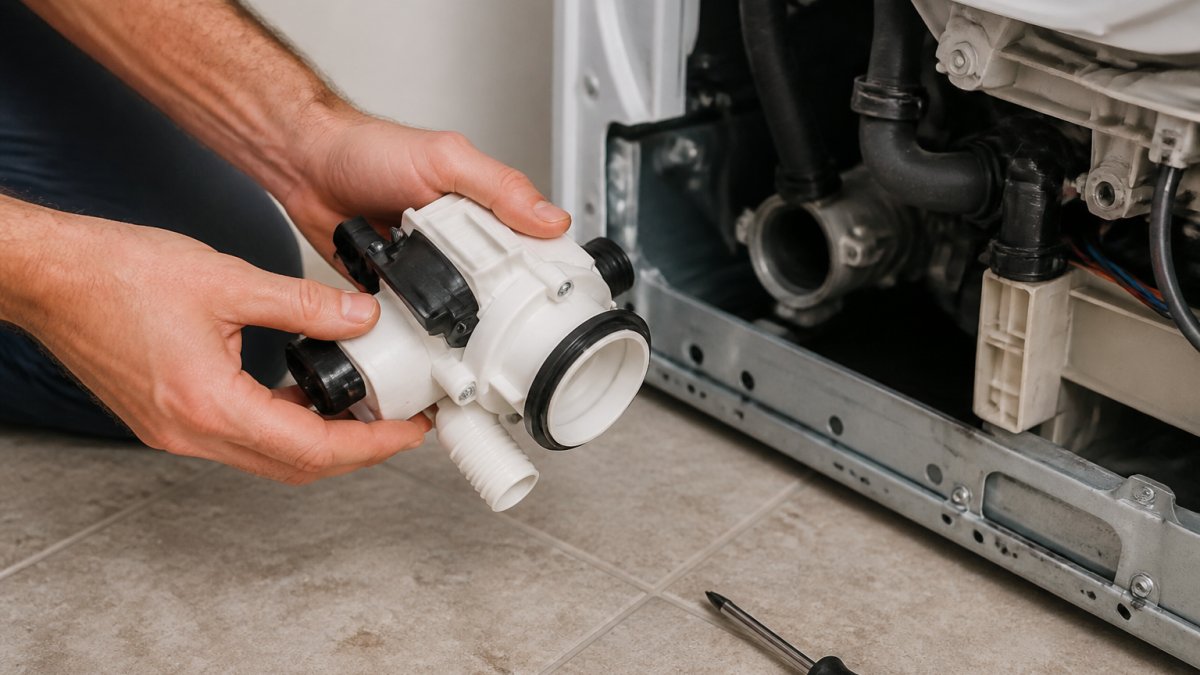
The washer water pump is the component that pushes water out of the drum during drain and spin cycles. When it fails, your machine stops draining, and the laundry sits in standing water.
Here’s what most cost guides get wrong. They quote a single “pump replacement” number without saying whether it’s the part alone or the installed total. Those are not close. According to Thumbtack’s washing machine repair cost guide, the pump part itself runs $35 to $200 depending on brand. Labor is what turns that part price into a real repair bill.
Below, we break down parts versus labor, the symptoms that point to a failing pump, and how to decide whether the repair is worth it.
Washing Machine Pump Replacement Cost: Parts vs. Labor Breakdown
Two published estimates frame the pump job, and they measure different things. Fixr’s washing machine repair cost guide puts a pump replacement job at $300 to $400, while U.S. News & World Report’s washer repair cost guide places pump work in the $200 to $300 range. The gap is not a contradiction. It reflects how each guide scopes the job, and most guides never tell you which scope they used.
Here is the apples-to-apples breakdown. Each line states exactly what the number includes, so you can compare any quote against it.
| Cost Component | What the Number Includes | What It Excludes | Published Range |
|---|---|---|---|
| Replacement pump (part only) | The pump assembly shipped to your door | Labor, diagnostic fee, hoses, clamps | $35 to $200 |
| Drain hose (part only) | Hose and clamps, if damaged alongside the pump | Labor to install | $3 to $30 |
| Diagnostic or service-call fee | Travel, inspection, testing, written estimate | Repair, parts, second visit if you decline | Commonly $50 to $150; some providers credit it toward the repair |
| Labor (standalone) | Technician time to access, swap, and test the pump | Parts, diagnostic fee, disposal | Varies by market and access difficulty |
| Total installed pump repair | Part, labor, and typically the diagnostic fee when credited | Optional add-ons such as new hoses or a surge protector | $200 to $400 |
A common mistake is comparing a parts-only figure to an installed total and assuming one shop is overcharging. A $60 pump plus a $120 labor charge plus a $75 diagnostic fee that is credited toward the repair is a $180 installed job, not a $255 job. Ask any provider to itemize the quote: part number, part price, labor rate and time, diagnostic fee, and whether that fee is credited. That is the only apples-to-apples comparison.
A second scoping trap is the word “pump.” Some estimates quote a drain pump only; others bundle the drain pump with a recirculation pump on machines that use both. Confirm which pump or pumps the quote covers before you compare totals.
Ask for the pump part number before you approve the repair. A quoted part number lets you confirm the pump matches your exact washer model, and it prevents a generic “pump” line item from hiding a cheaper universal part.
When you compare quotes, put every number in one of four buckets: part, labor, diagnostic fee, and total installed. A quote that will not separate those buckets is not comparable to one that will.
Signs of a Bad Washing Machine Drain Pump
The clearest sign of a failing drain pump is a washer that won’t drain or spin out, leaving clothes soaked at the end of the cycle. Other signals include standing water in the drum, a humming noise without drainage, and water leaking from underneath the machine.

Not every drainage problem means a new pump. A clogged filter or a kinked drain hose produces the same symptoms at a fraction of the cost. A technician should check both before quoting a pump replacement.
Watch for these signs of a bad washing machine drain pump:
- Water left standing in the drum after the cycle ends
- The machine hums during drain but moves no water
- Clothes come out soaking wet after the spin cycle
- Water pools under the washer during drain
- Repeated drain error codes on the display
If the filter and hose are clear and the pump still won’t move water, the pump itself is the likely culprit.
The Washing Machine Diagnostic Fee: What It Covers and What It Doesn’t
A washing machine diagnostic fee is the charge for a technician to inspect the appliance and identify the fault, and it typically does not include the repair itself. Think of it as the cost of an expert diagnosis, separate from parts and labor.
What the fee covers: travel to your home, a hands-on inspection, testing of the pump, filter, hose, and related components, and a repair estimate. What it usually doesn’t cover: the repair, replacement parts, or a second visit if you decline the first quote.
Ask two questions before booking. First, is the diagnostic fee waived if you approve the repair? Second, is the estimate firm or an estimate range? A provider that answers both clearly is one you can plan around. At Kelly Appliance Repair Service, we quote parts and labor before any work begins so there are no surprises on the invoice.
Washing Machine Repair vs. Replacement: How to Decide
Repair wins when the washer is under roughly eight years old and the repair costs well under half the price of a new machine. Replacement makes more sense when the unit is older, the pump failure is one of several problems, or the repair bill approaches the cost of a new washer.
BOOK YOUR SERVICE REPAIR TODAY →
Use this framework:
| Situation | Recommended Path |
|---|---|
| Washer under 8 years old, single pump failure | Repair |
| Washer over 10 years old, repeated breakdowns | Lean toward replacement |
| Repair quote near half the price of a new unit | Compare carefully before deciding |
| Pump failure plus motor or control board issues | Replacement usually wins |
Consumer Reports’ repair-or-replace guidance recommends weighing repair cost against the appliance’s age and the price of a comparable new model. The math is simple: a repair that buys several more years is money well spent; one that buys months is not.
Don’t approve a pump replacement without confirming the filter and drain hose were checked first. A clogged filter mimics a dead pump, and paying for a new pump you didn’t need is the most common overcharge we see.
What Affects Your Pump Repair Quote: Brand, Model, and Location
Brand and model drive the widest price swings, because pump parts vary significantly by manufacturer and because access to the pump varies by cabinet design. A common top-load washer pump is inexpensive and easy to reach. A front-load washer from a premium brand can use a specialized pump that costs far more and takes longer to reach.
Here is how the variables actually move the number.
Washer type. Top-load machines usually expose the pump from the front or rear panel with a few screws, so labor time is short. Front-load machines often require removing the top, control panel, and sometimes the door boot to reach the pump, which adds labor time. The part may be similar; the access is not.
Model accessibility. Two washers from the same brand can price differently because one hides the pump behind a removable access panel and the other requires partial disassembly. When you get a quote, ask the technician to state the estimated labor time in hours, not just a flat labor charge. That single number tells you whether the quote reflects an easy or hard access job.
Brand and part availability. Common domestic brands tend to have widely stocked pumps. Premium and imported brands can use proprietary pumps with longer lead times and higher part prices. If a provider quotes a part price far above the published range, ask whether the part is OEM or aftermarket and whether an aftermarket equivalent is available.
Location and labor rates. Local labor rates and travel distance shape the final bill. Two shops in the same market can differ by $50 to $100 on the same job because of overhead and scheduling, not because one is overcharging. Get two quotes when the total is near the top of the $200 to $400 range.
Age and condition. An older washer may need hoses, clamps, or a filter housing replaced at the same time. Those add-ons are legitimate, but they should appear as separate line items, not folded into a single “pump replacement” price.
When you get a quote, confirm it includes:
- The exact pump part number and its price
- Estimated labor time in hours and the labor rate
- Whether the diagnostic fee is separate or credited toward the repair
- Whether hoses, clamps, or the filter are included or extra
- Any warranty on the part and on the labor
A fair quote is itemized and firm. If a provider will not break it down, get a second opinion.
A flat “pump replacement” price with no part number and no labor time is the hardest quote to compare. Ask for the breakdown in writing before you approve any work.
Frequently Asked Questions
How much does it cost to fix a water pump on a washing machine?
Published repair guides place a pump replacement job around $300 to $400 when a technician does the work, while the pump part alone runs roughly $35 to $200 depending on the brand. The total you pay depends on your washer model, local labor rates, and whether the diagnostic fee is rolled into the repair. Always ask for a written estimate that separates parts from labor before you approve any work.
How can I tell if my washing machine pump is bad?
The most common signs of a bad washing machine drain pump are standing water left in the tub after a cycle, a washer that won’t drain or spin out, unusual grinding or humming noises during the drain phase, and water leaking from underneath the machine. Before assuming the pump failed, check the drain hose for kinks and clean the filter, since a clogged filter can mimic a failing pump.
Is it cheaper to repair or replace a washing machine with a bad pump?
For most washers under eight years old, a pump replacement is the cheaper path, since the repair typically costs a fraction of a new machine. Once a washer passes the 10-year mark and the pump failure comes alongside other issues, replacement often makes more financial sense. Use the 50% rule: if the repair quote exceeds half the price of a comparable new washer, replacement is usually the better call.
Does a washer repair estimate include the diagnostic fee?
Not always. Many appliance repair companies charge a separate service call or diagnostic fee just to identify the problem, then quote the repair on top of that. Ask upfront whether the diagnostic fee is waived or credited toward the repair if you approve the work. A clear estimate should list the diagnostic charge, parts cost, and labor cost as separate line items so you can compare quotes fairly.
How long does it take to replace a washing machine pump?
A drain pump replacement is a straightforward job for an experienced technician and usually takes 30 to 60 minutes once the machine is accessible. Front-load washers sometimes take longer because the pump sits behind the lower access panel, while top-load models vary by brand. If the technician also finds a clogged hose or a worn belt, expect the visit to run closer to 90 minutes.
Leave a Reply