Table of Contents
- Why Preventative Maintenance Protects Your Rental Investment
- 7 Appliance Maintenance Checklist for Landlords
- Building Your Rental Property Maintenance Schedule Template
- The Cost of Deferred Maintenance in Rental Properties
- Smart Home Integration for Proactive Planning
- Vendor Management Workflows That Save Time
- Tenant-Led Maintenance: Turning Renters Into Your First Line of Defense
- Frequently Asked Questions
Last Updated: September 16, 2026
Why Preventative Maintenance Protects Your Rental Investment
Preventative maintenance for rental properties means scheduling regular inspections and servicing of appliances and building systems before they fail, rather than waiting for a breakdown call. Units on a set service schedule often avoid the emergency calls that eat into owner profits. A failed refrigerator or leaking washer rarely announces itself in advance, but the warning signs are almost always there weeks earlier.
The core argument here is simple: rental appliance maintenance is not a repair expense, it is a cash flow strategy. Every dollar spent on a scheduled service call is a dollar not spent on emergency labor, water damage, or a tenant turnover.
The Real Cost of Ignoring Small Repairs
A dripping washer hose or a refrigerator running warm looks minor. In practice, these are the early stages of the most expensive problems landlords face. Small leaks rot subflooring and cabinets. A compressor that strains for months fails suddenly, taking a full refrigerator of tenant groceries with it. Deferred maintenance also compounds: a worn belt becomes a damaged drum, and a clogged drain line becomes a flooded laundry room.
7 Appliance Maintenance Checklist for Landlords
A landlord appliance maintenance checklist converts vague good intentions into a repeatable routine. This checklist covers the seven appliances that generate the most service calls in rental properties.

- Washer: Check supply hoses for bulges or cracks, clean the drain pump filter, and confirm the machine levels correctly during spin.
- Dryer: Clear the lint trap and vent duct, inspect the drum belt, and verify the exhaust flap opens freely.
- Refrigerator: Test door gaskets with the paper test, vacuum condenser coils, and check the drain pan for standing water.
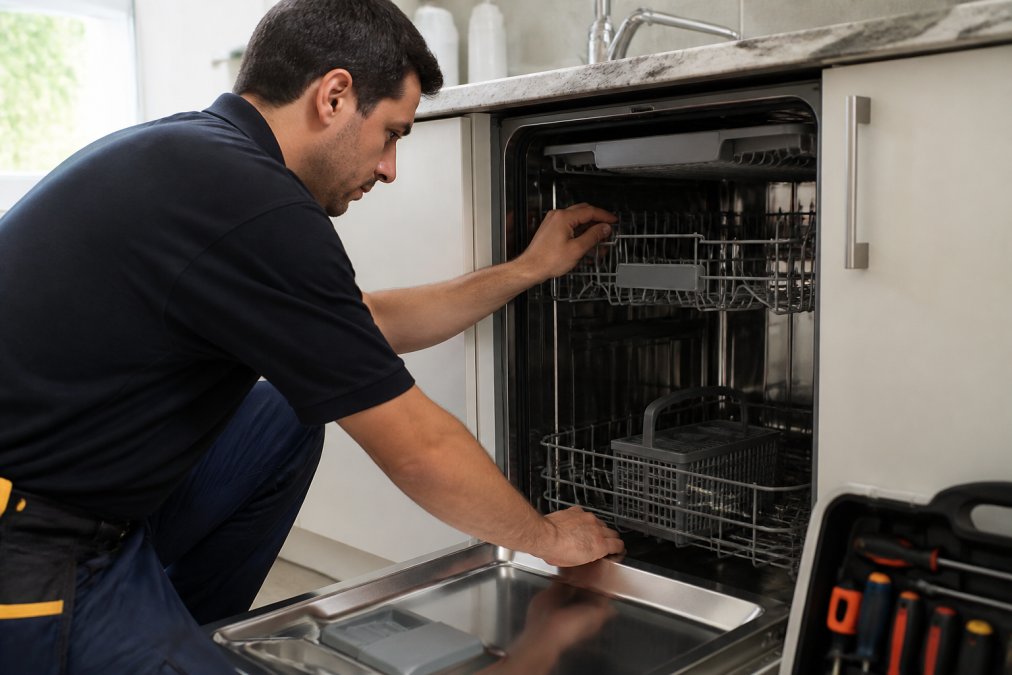
- Dishwasher: Inspect the door seal, clear the filter basket, and run a cycle to confirm proper drainage.
- Oven and range: Test the igniter or heating element, check the door seal, and confirm the gas connection or outlet is secure.
- Garbage disposal: Run cold water and check for unusual noise or slow drainage, which signal a developing clog.
- Microwave: Inspect the door latch and turntable, and confirm the unit heats evenly.
Washer and Dryer Checks
Washers and dryers account for a large share of emergency calls because their failures are wet and disruptive. The supply hoses behind a washer are the most overlooked component in the unit; they degrade quietly and burst without warning. A common mistake is replacing a broken washer when the actual fault was a clogged drain filter the tenant never knew to clean.
Refrigerator and Dishwasher Inspections
Refrigerators fail slowly, which is exactly what makes them dangerous to ignore. A gasket that no longer seals forces the compressor to run constantly, shortening its life and raising the electric bill. Dishwashers reveal their problems through the door seal and drain line; a worn seal leaks onto the floor beneath the cabinet where nobody looks.
Building Your Rental Property Maintenance Schedule Template
A rental property maintenance schedule template turns scattered reminders into a preventive schedule the whole team can follow. The template below maps each appliance to a frequency and a season, so nothing depends on memory.
| Appliance | Task | Frequency | Best Season |
|---|---|---|---|
| Washer | Inspect hoses, clean filter | Every 6 months | Spring / Fall |
| Dryer | Clear vent duct | Every 3 months | Quarterly |
| Refrigerator | Vacuum coils, test gasket | Every 6 months | Spring |
| Dishwasher | Check seal and drain | Every 6 months | Fall |
| Oven / range | Test element and seal | Annually | Fall |
| Garbage disposal | Test run and clear | Every 6 months | Spring / Fall |
| HVAC system | Filter change and service | Every 3 months | Seasonal |
Seasonal Upkeep Calendar
Seasonal upkeep splits into two anchors: a spring pass and a fall pass. Spring focuses on anything that handles water and heat, since summer demand stresses cooling and laundry systems. Fall focuses on heating and sealing, preparing units for cold weather. A property walkthrough at each anchor catches wear and tear before it becomes a capital expenditure, and it gives you a documented maintenance log for each unit.
Tie your seasonal walkthrough to the lease renewal cycle. A unit inspected two months before renewal gives you time to fix issues the tenant might otherwise cite as a reason to leave, which protects tenant retention.
The Cost of Deferred Maintenance in Rental Properties
The cost of deferred maintenance in rental properties is rarely a single line item; it shows up as emergency repairs, water damage, and lost rent. What most guides never give you is a way to measure whether your preventative spend is paying off, the difference between a maintenance budget and a maintenance strategy.
The Preventative vs. Reactive Cost Curve
Reactive repairs cost more per incident than scheduled ones, and the multiplier grows with the severity of the failure. A scheduled washer hose replacement is a parts-and-labor visit; the same hose failing unattended becomes a water-damage claim that touches flooring, subfloor, drywall, and possibly the unit below. The ratio between a planned service call and its emergency equivalent widens sharply once water, refrigeration loss, or tenant displacement is involved, not because labor rates change, but because the scope of damage does.
Three cost buckets drive the gap:
- Emergency labor premiums. After-hours and same-day calls typically carry higher rates than a scheduled visit during normal business hours.
- Collateral damage. Water from a failed supply line or a leaking dishwasher seal damages finishes and structure, not just the appliance.
- Lost rent and turnover. A unit that is uninhabitable during repairs, or a tenant who leaves because of repeated breakdowns, converts a repair into a vacancy.
A Simple ROI Framework for Maintenance Spend
You do not need software to track maintenance ROI. You need three numbers per unit, reviewed quarterly:
- Preventative spend. Total cost of scheduled service calls, filter changes, and inspections in the period.
- Reactive spend. Total cost of unplanned repairs, including emergency premiums and any collateral damage.
- Downtime cost. Rent lost or credited because a unit or system was out of service.
Preventative maintenance is not a cost center to minimize; it is a ratio to manage. The goal is not zero maintenance spend, it is a declining share of that spend going to emergencies.
Where Compliance Enters the Math
The HUD guidance on property condition standards treats ongoing maintenance as a baseline expectation for safe, habitable housing, and safety compliance issues like a blocked dryer vent or a failing gas range are not optional fixes. Those are not discretionary line items you can defer to protect the ratio, they are the floor. Budget them first, then apply the ROI framework to the discretionary work.
BOOK YOUR SERVICE REPAIR TODAY →
Building the Budget
Set an annual maintenance reserve per unit, sized to your appliance inventory and age, then fund it monthly rather than in lump sums when something breaks. The reserve smooths cash flow, and the quarterly ratio review tells you whether it is sized correctly. Asset protection and long-term value depend on staying ahead of failures, but staying ahead only works if you can see, in numbers, whether you actually are.
Smart Home Integration for Proactive Planning
Smart home integration shifts appliance maintenance from reactive to proactive by surfacing problems before they become emergencies. Leak sensors under washers and dishwashers alert you the moment water appears, and smart thermostats and appliance monitors flag a refrigerator running warm or an HVAC system drawing unusual power. These devices do not replace a technician, but they tell you when to call one.
Vendor Management Workflows That Save Time
Vendor management workflows decide whether maintenance runs smoothly or stalls at every step. Most landlords treat vendor selection as a one-time decision and then improvise every service call. The operators who keep maintenance cheap build a repeatable workflow instead: a vetted bench, a standing schedule, and a single intake channel.
Vetting the Bench Before You Need It
The mistake is searching for a contractor during an emergency. Build the bench during a calm period, and vet for four things:
- Licensing and insurance. The FTC guidance on hiring service providers reminds owners to confirm licensing and insurance before allowing anyone into a unit. Ask for the certificate of insurance directly and verify the expiration date.
- Response commitments. Get a written window for routine and emergency calls. A vendor who cannot commit to a response time in writing will not meet one under pressure.
- Appliance coverage. Match providers to the systems they actually service. A general handyman is fine for filters and seals; a sealed-system or gas appliance repair needs a specialist.
- Documentation habits. Ask whether they provide a written service report per visit. If they do not, your maintenance log will have holes.
The Standing Schedule
Once the bench is set, convert routine work into a standing agreement. A recurring service calendar, quarterly dryer vent clearing, semi-annual washer hose and refrigerator coil service, annual oven and range inspection, removes the decision from every cycle. This is also where a single point of contact pays off: one coordinator receives all work orders, dispatches to the right provider, and closes the loop with the tenant.
The Intake and Documentation Loop
- Intake. Tenant or inspection report generates a work order with unit number, appliance, and symptom.
- Triage. Routine vs. emergency is decided against a written threshold, not by whoever answers the phone.
- Dispatch. Work order routes to the assigned provider for that appliance type.
- Close-out. Service report is filed against the unit’s maintenance log, and the next scheduled visit is set.
Review your vendor bench once a year against the ROI ratio from your maintenance budget. A provider whose repairs keep recurring on the same appliance is a signal to re-vet, not to re-book.
A vendor who handles both routine and emergency calls, like the team at Kelly Appliance Repair Service, removes the scramble of finding someone new each time something breaks, but the workflow that makes them effective is the one you build around them.
Tenant-Led Maintenance: Turning Renters Into Your First Line of Defense
Tenant-led maintenance works because tenants are in the unit every day and notice changes before any scheduled visit. Give renters a simple reporting channel and a short list of warning signs: a refrigerator that feels warm, a washer that shakes or leaks, a disposal that hums without draining. When tenants know what to look for and how to report it, small issues get caught early.
Frequently Asked Questions
What are the 5 types of preventive maintenance?
The five common types are routine inspections (monthly walkthroughs), scheduled servicing (HVAC, appliances), predictive maintenance (using smart sensors), condition-based maintenance (acting when wear is detected), and seasonal upkeep (gutter cleaning, weatherproofing). For rental properties, combining routine inspections with scheduled appliance servicing catches most issues before they become emergency repairs.
How often should a landlord inspect a rental property?
Most landlords should conduct a full property walkthrough at least twice a year, plus a quick check at lease renewal. High-turnover units or older homes may need quarterly inspections. Between formal inspections, encourage tenants to report leaks, strange noises, or temperature changes immediately. Regular inspections help you catch wear and tear early and avoid deferred maintenance costs.
What is the difference between reactive and preventative maintenance?
Reactive maintenance means fixing something after it breaks, like calling for emergency repairs when a water heater fails. Preventative maintenance means servicing and inspecting systems on a schedule to prevent breakdowns. Preventative maintenance costs less over time, protects asset value, and keeps tenants happier because they deal with fewer disruptions.
Which maintenance services do landlords need the most?
The most requested services are HVAC servicing, plumbing and leak detection, appliance repairs (washers, dryers, refrigerators), and pest mitigation. Roof and gutter maintenance and electrical safety checks are also critical. A solid rental property maintenance schedule template should include these core areas plus seasonal tasks like caulking and grout repair.
Leave a Reply